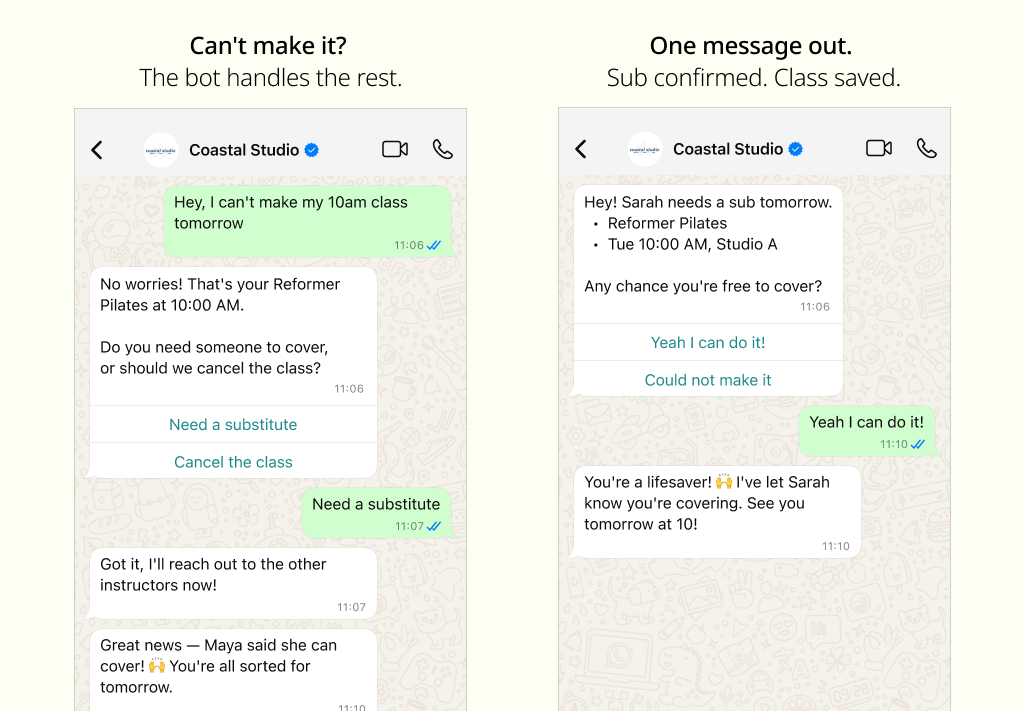
When an instructor needs to cancel a class, the studio coordinator becomes the middleman — calling or messaging other instructors one by one to find a substitute. It's slow, stressful, and entirely dependent on one person being available to coordinate in real time.
The instructor labour market makes this worse. 48% of fitness instructors teach part-time to supplement income, with only 28% working full-time — meaning most studios are coordinating across a pool of instructors with unpredictable availability. Studio managers spend roughly 25% of their total working time on substitute instructor coordination and communication alone.
The stakes are high on the member side too. Members who experience a disrupted or cancelled class represent a critical churn risk, and members who regularly attend group classes are 56% less likely to cancel their membership than those who don't — making class consistency a direct retention lever. A last-minute cancellation that reaches members isn't just an inconvenience; it chips away at the loyalty the studio depends on.
91.2% of boutique fitness studios were not sustainably profitable as of 2023 — and operational drag from manual scheduling is a quiet but significant contributor.